
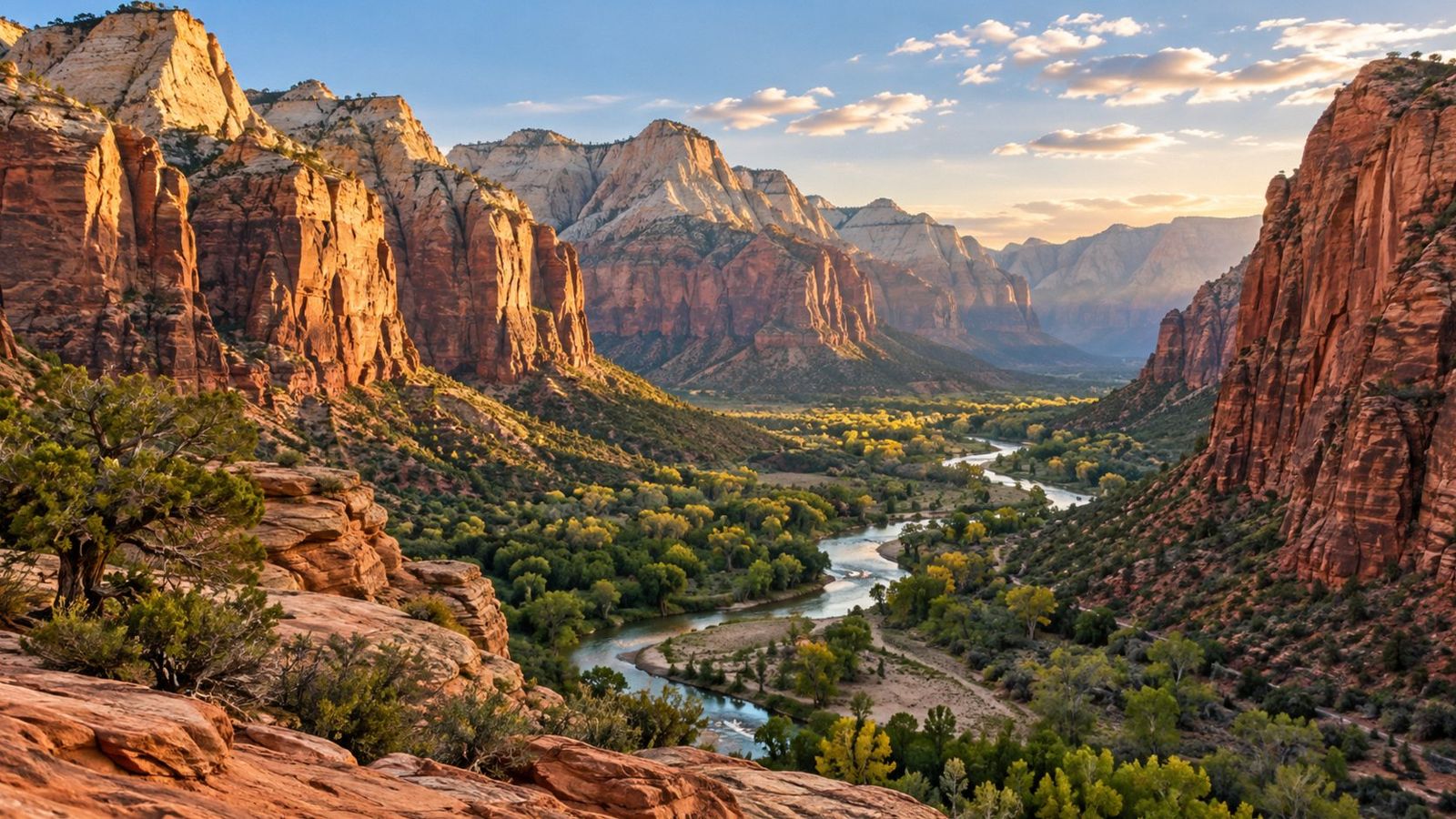
Want to swap a day on the Strip for salt flats, sandstone cliffs, or a canyon view? Several national parks near Las Vegas make that possible. The trick is choosing one that fits your schedule. Two hours to a visitor center can still leave you with plenty of driving inside the park.
Here's how six options compare, what makes each worth the journey, and where an overnight stay makes more sense than a rushed return.
Which national parks can you reach from Las Vegas?
Death Valley and Zion are the most practical choices for a full-day outing. The other parks below suit an overnight trip or a longer road trip.
These are approximate one-way driving estimates from the Las Vegas Strip to the named arrival point, not live navigation times. Allow extra time for traffic, stops, entrance queues, and travel within the park.
| National park | Arrival point | Approximate drive | Suggested stay |
|---|---|---|---|
| Death Valley | Furnace Creek Visitor Center | 2 to 2.5 hours | Full day or overnight |
| Zion | South Entrance, Springdale | 2.5 to 3 hours | Full day or 1 to 2 nights |
| Joshua Tree | North Entrance, Twentynine Palms | 3.5 to 4.5 hours | 1 to 2 nights |
| Bryce Canyon | Bryce Canyon Visitor Center | 4 to 4.5 hours | At least 1 night |
| Grand Canyon | South Rim visitor area | 4.5 to 5 hours | At least 1 night |
| Great Basin | Lehman Caves Visitor Center | 4.5 to 5.5 hours | 1 to 2 nights |
Death Valley: salt flats and wide-open desert
Death Valley is the easiest national park to reach from Las Vegas for a day of desert sightseeing. Its appeal is the contrast between salt flats, folded badlands, and colorful hills. You can see several of its signature landscapes without committing to a long hike.
For a first visit, keep your route around Furnace Creek and Badwater Road:
- Zabriskie Point: a viewpoint over folded badlands, with a short walk from the parking area.
- Badwater Basin: salt flats at the lowest point in North America.
- Artists Drive: colorful hills around Artists Palette, worth a stop on the return from Badwater.
Allow roughly four to six hours inside the park for these stops, meals, and short walks. That's a suggested sightseeing allowance, not a fixed tour duration. Add an overnight stay if you want sunrise, sunset, or more distant places such as the sand dunes.
Late fall, winter, and early spring generally offer more comfortable conditions on the valley floor. In hot weather, the NPS advises against lower-elevation hiking. Bring water, download maps, and check heat and flood precautions plus road access. A short walk can still be a poor choice in extreme heat.
Zion: a full day beneath the canyon walls
Zion National Park puts you beneath the canyon walls rather than above them. Choose it if walking beside the Virgin River and looking up at sandstone cliffs sounds more appealing than moving between roadside viewpoints.
A straightforward first visit
Allow most of a day at the park for this suggested route.
- Springdale: arrive through the South Entrance and find parking.
- Zion Canyon shuttle: ride to Temple of Sinawava.
- Riverside Walk: follow the paved path beside the Virgin River.
- Pa'rus Trail: after returning by shuttle, add a walk near the visitor center.
During shuttle operations, most visitors can't drive along Zion Canyon Scenic Drive. No shuttle reservation is needed, but parking, queues, and the ride into the canyon all take time. Leave room in your schedule rather than planning a hike immediately after arrival.
Angels Landing requires a permit. The bottom-up Narrows hike doesn't, but it continues beyond Riverside Walk into the river. Water levels, cold water, and flash-flood risk can change whether it's suitable or open. Read the permit rules and Narrows guidance before building either into your trip.
Spring and fall are worth considering for walking, although conditions vary and spring runoff can affect river hikes. Summer brings heat; winter can bring ice. Stay near Springdale for an early start or if you want a longer hike without a late return to Las Vegas.
Joshua Tree: boulder walks and a night under the stars
Joshua Tree combines its namesake trees with rounded boulders, open desert, and short trails that let you explore on foot. It's a good choice for photography and a slower visit with time after sunset.
Hidden Valley is a useful first stop: its one-mile loop takes you into a rock-enclosed valley, with about an hour suggested for the walk. Barker Dam adds a short loop with ranching history, although the dam may be dry. For a wider view, drive to Keys View, which overlooks the Coachella Valley.
Stay nearby if you want sunset or stargazing. Compare the North Entrance with your accommodation and planned route. Joshua Tree has three entrances, and GPS shortcuts can lead onto unsuitable backcountry roads.
Cooler months usually suit walking better than summer. Start early on hot days, carry water even for short trails, and have another stop ready if a parking area is full. Clear skies and the moon phase will matter more to stargazing than simply arriving after dark.
Bryce Canyon: views from the rim and walks among hoodoos
Bryce Canyon's hoodoos are its reason to make the drive. These irregular rock spires fill natural amphitheaters, giving you a different landscape from Zion even though the two parks work well on the same road trip.
Begin with Sunrise Point and Sunset Point, then add Inspiration Point or Bryce Point for another angle over the formations. A half day can cover several main viewpoints and a short rim walk. If you want to walk among the hoodoos, allow more time rather than trying to fit every viewpoint into the same visit.
A walk below the rim
The Queens Garden and Navajo combination takes you among the hoodoos.
The NPS recommends descending from Sunrise Point via Queens Garden and climbing back toward Sunset Point. The Wall Street side closes in freezing winter conditions, so check which route is available.
Late spring through early fall is a practical period to consider for hiking, subject to conditions. Bryce sits at high elevation: nights can be cold, summer thunderstorms matter, and winter snow can affect trails and roads. Pack layers and check the forecast. Stay overnight to avoid turning the visit into a brief stop between two long drives.
Grand Canyon: give the South Rim an overnight stay
The South Rim is a practical starting point for a first visit to Grand Canyon National Park. You can take in the scale of the canyon from viewpoints and rim walks without hiking down into it. Access is year-round, subject to weather and local restrictions.
Start around Mather Point near the visitor center, then follow a manageable section of the Rim Trail toward Yavapai Point. Add viewpoints along Hermit Road if time and transport allow. The NPS Rim Trail guide shows distances and access points, so you can choose a short section rather than attempt the whole route.
A half day gives you time for several views and a walk; an overnight stay leaves room for sunset or sunrise. The drive from Las Vegas is about 278 miles (447 kilometers). Spring and fall are useful starting points for planning, but check the forecast: winter brings possible snow and ice, while summer hiking below the rim can be dangerously hot. The NPS advises against a rim-to-river return hike in one day.
Check which Grand Canyon your tour visits
Grand Canyon West is outside the national park. The Skywalk is on Hualapai tribal land and has separate admission arrangements. Check the named destination before booking.
Great Basin: caves, mountain scenery, and dark skies
Great Basin offers a mountain-and-cave trip with a different feel from the desert parks. Its main attractions include Lehman Caves, ancient bristlecone pines, alpine scenery, and opportunities for stargazing.
Book a Lehman Caves tour first if going underground is a priority. Tours vary in length and availability, and walk-up places aren't guaranteed. The park has no entrance fee, but cave tours require separate paid tickets. Check the current tour options and booking details.
When fully open, Wheeler Peak Scenic Drive leads to high-elevation trailheads for bristlecone pines and alpine lakes. Choose a walk that suits your fitness and the altitude instead of assuming a short distance will feel easy.
Summer generally offers the widest mountain access, with early fall another possibility before snow limits the roads. Thunderstorms can affect summer hikes, so check the forecast and start early. Check which mountain roads are open before planning a high-elevation hike, especially in fall and winter.
Allow a full day for a cave tour and selected above-ground stops, then stay for the evening sky. One or two nights near Baker are more practical than a same-day return to Las Vegas.
Check admission costs before you go
| National park | Base vehicle fee |
|---|---|
| Death Valley | $30 |
| Zion | $35 |
| Joshua Tree | $30 |
| Bryce Canyon | $35 |
| Grand Canyon | $35 |
| Great Basin | No entrance fee |
These are base entrance charges, not a complete trip budget.
International visitors: at Zion, Bryce Canyon, and Grand Canyon, non-U.S. residents aged 16 and older pay an additional $100 per person under the 2026 rules unless covered by an eligible pass.
The America the Beautiful Annual Pass costs $80 for eligible U.S. citizens and residents and $250 for nonresidents. Check the NPS coverage rules for your group. Camping, cave tours, and other activities may cost extra.
Pick one park and leave time to enjoy it
For a single day, choose Death Valley for desert viewpoints in suitable weather or Zion for canyon walks with extra transport time. Save Joshua Tree, Bryce Canyon, Grand Canyon, and Great Basin for an overnight trip if possible.
With several days, Zion and Bryce Canyon make a useful pairing. Give each park its own visiting time rather than treating the drive between them as part of a sightseeing day. Confirm your route and current access before booking.