The best national park trip from San Diego depends on how much time you want to spend outside the car. You can walk among Joshua trees and granite boulders and still make it home that evening. An island hike takes more planning, while the giant sequoia groves are far enough away to build a trip around.
How far are the closest national parks from San Diego?
| National park | Where to aim | Travel time | Time to set aside |
|---|---|---|---|
| Joshua Tree | West Entrance via the town of Joshua Tree | About 2.5 to 3 hours by car | Full day or overnight |
| Channel Islands | Ventura Harbor, then Scorpion Cove on Santa Cruz Island | About 3 to 4 hours by car, plus about 1 hour by boat | One island day, ideally after a night in Ventura |
| Death Valley | Furnace Creek | About 5.5 to 6.5 hours by car | Two nights |
| Sequoia | Three Rivers, then Giant Forest | About 5.5 to 7 hours by car to Giant Forest | Two nights |
| Kings Canyon | Grant Grove via Highway 180 | About 6 to 7 hours by car | Long weekend if paired with Sequoia |
These are planning estimates, not live directions. Allow extra time for Los Angeles traffic, park entrance queues, and ferry check-in. For the Sierra parks, navigate to the grove you want to visit. Reaching the entrance station can still leave a substantial mountain drive.
Joshua Tree: the best national park day trip from San Diego
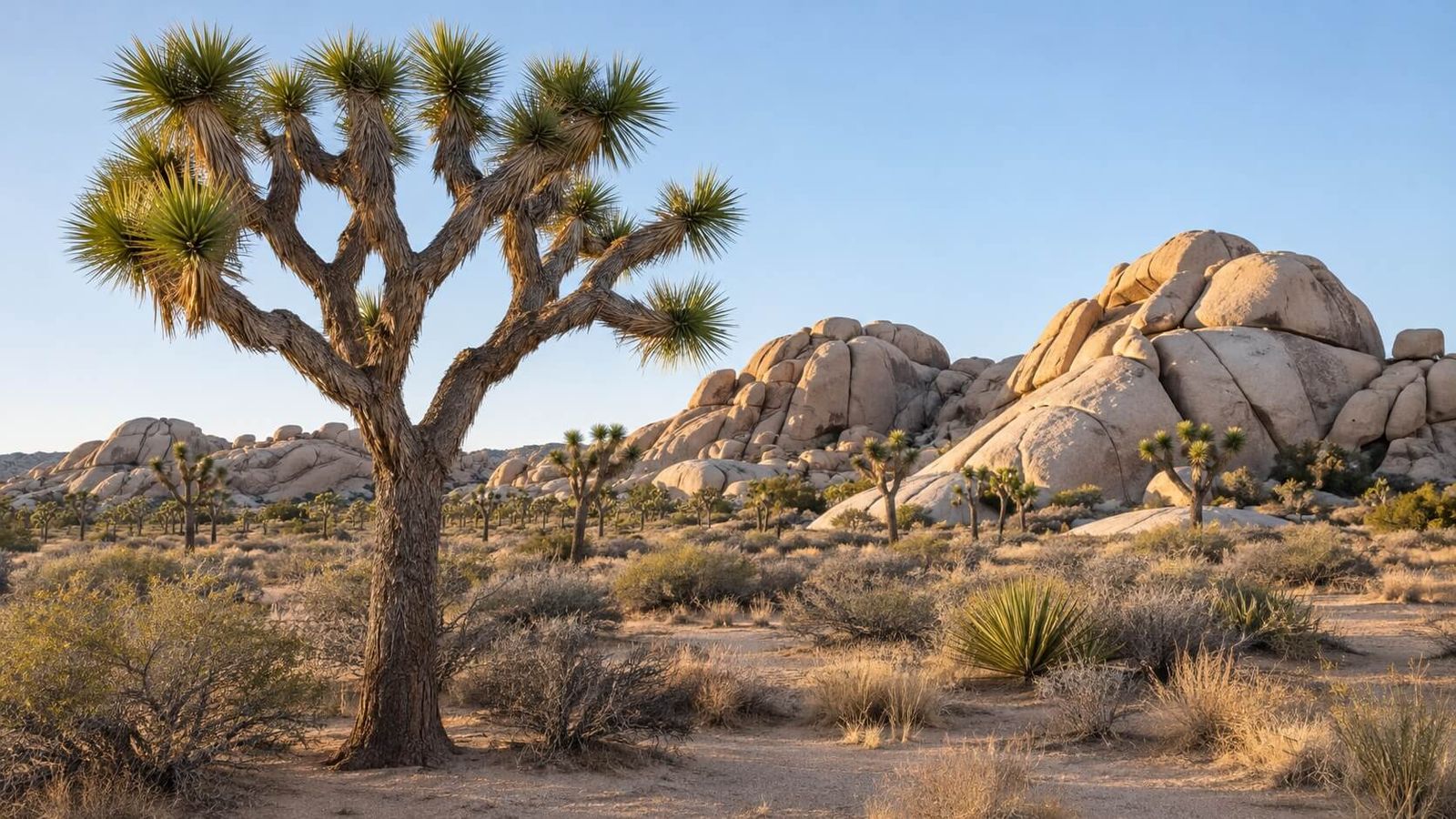
For a first visit to Joshua Tree National Park, use the West Entrance and spend your time in the park's higher Mojave Desert. That's where you can fit in the namesake trees, boulder piles, and a short hike without driving the length of the park.
- Walk the one-mile Hidden Valley loop through a basin enclosed by granite walls.
- Pick Barker Dam for a second short walk or Skull Rock for a quicker stop among the boulders.
- Finish at Keys View for a look over the Coachella Valley if visibility is good and you have time before the drive home.
Cottonwood is a useful entrance if you want to see the palm oasis on the south side or drive through the park. If Hidden Valley is your priority, the south entrance puts you roughly 40 miles from that part of the park. On a day trip, that extra drive matters.
Spring and fall usually offer better hiking weather than summer. Carry water, download a map before entering, and shorten or skip exposed walks in extreme heat. The standard private vehicle pass is $30.
Channel Islands: book the boat before you book the hotel
For a first visit to Channel Islands National Park, look for a boat from Ventura to Scorpion Cove on Santa Cruz Island. Once ashore, walk up to Cavern Point for views along the cliffs, then leave time to explore near the landing. If you want to kayak, check tour availability and how it fits your return sailing.
Plan around the return boat
The crossing takes about an hour each way. Check in advance how much time your sailings leave on the island, and confirm the boarding deadline. Bring lunch, water, and a wind layer. There is no food service at Scorpion Cove, and sea conditions can change the schedule.
The park has no entrance fee, but the boat is a separate expense. Island Packers lists a $72 round-trip Santa Cruz day fare for ages 13 to 54, with other rates by age and trip type. If you're camping on the island, reserve the campsite as well as the boat.
Death Valley: give the desert a full day
Stay near Furnace Creek if your main reason for visiting Death Valley National Park is to see the salt flats and badlands. With two nights, you can use the middle day for Zabriskie Point in the morning, Badwater Basin, and Artists Drive on the way back north, if the roads are open.
Late fall through early spring is a better window for walking at lower elevations. In extreme summer heat, skip hikes on the valley floor and use short stops near an air-conditioned vehicle. Check NPS safety advice and road alerts, fill up before remote stretches, and carry extra water. The standard private vehicle pass is $30.
Sequoia and Kings Canyon: choose a grove before choosing a base
Head to Giant Forest in Sequoia National Park if the General Sherman Tree is your priority. Three Rivers puts you near the southern entrance, but the winding road from the foothills to Giant Forest can take about an hour. Give the grove most of a day if you want to walk past more than its most famous tree.
In Kings Canyon National Park, start at Grant Grove for the General Grant Tree. The drive down to Cedar Grove is a separate outing on a seasonal road. If you have one full day in the Sierra, choose one grove. With two days, you can visit both parks if the connecting road is open.
Summer and early fall are good starting points for a trip that includes both groves. Check road conditions and chain requirements before booking a base, especially if you plan to travel between the parks. The standard $35 private vehicle pass covers both parks. U.S. nonresidents aged 16 and older may owe an additional $100 each unless covered by an eligible pass. Check the current fee and pass rules before your trip.
Only have half a day? Stay in San Diego for Cabrillo
Cabrillo National Monument is an NPS site on Point Loma, within San Diego. Start at the Old Point Loma Lighthouse and take in the harbor views, then head down to the coast if there's a low tide during opening hours. If tide timing doesn't work, the lighthouse and coastal views still make a worthwhile visit.
The standard private vehicle fee is $20. Check the tidepool guidance before going: the rocks can be slippery, and the coastal area can close before the rest of the monument.
Which trip should you take first?
Pick Joshua Tree if you have one full day and want to visit a national park. Choose Channel Islands if the coast is the main draw and you can get the right sailing. Save Death Valley for cooler weather and the Sierra parks for a trip with enough time to walk through the groves. If you're fitting a visit between other San Diego plans, Cabrillo is the easiest choice.