National and State Parks in Wyoming


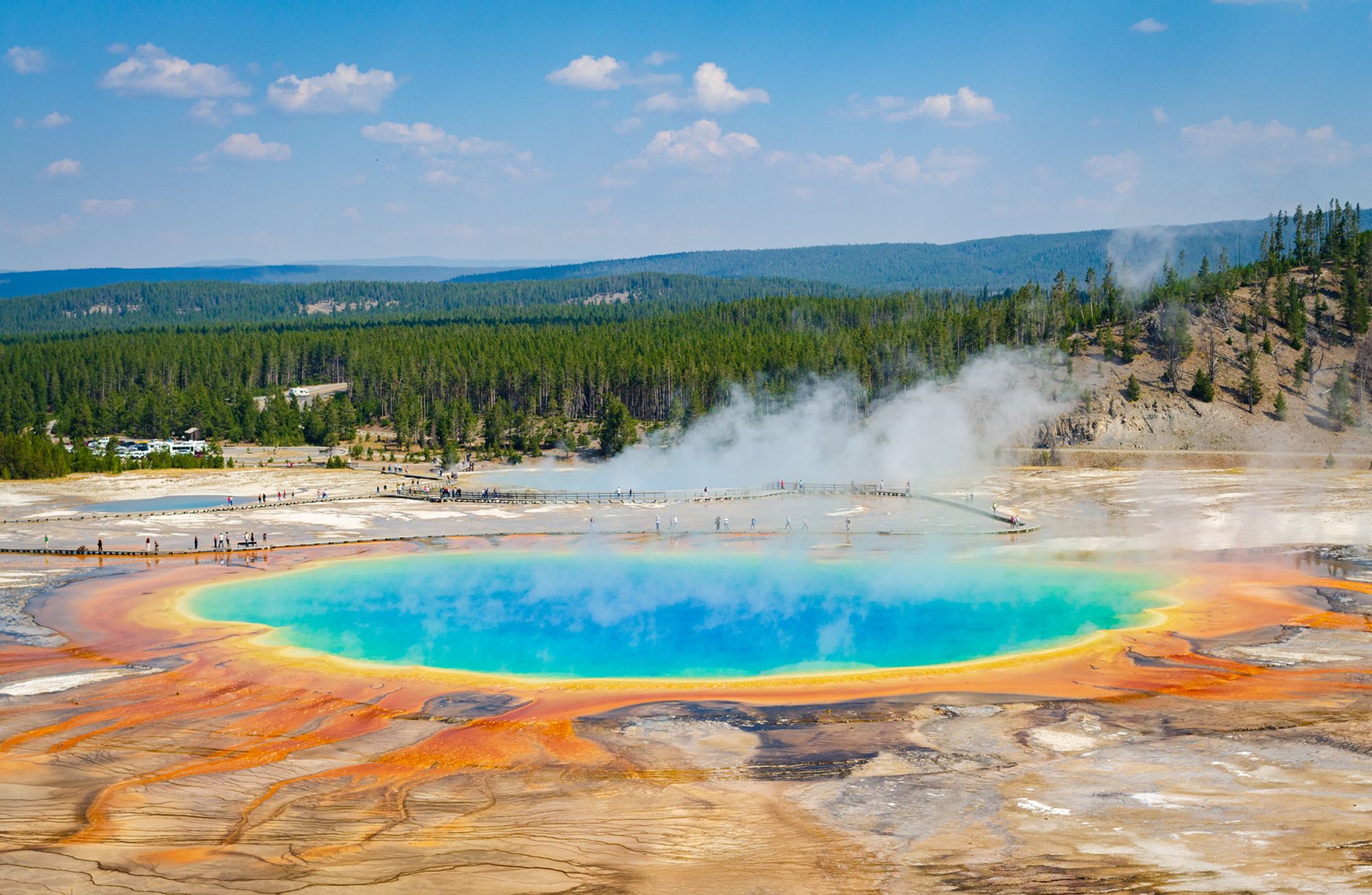
National parks in Wyoming bring together Yellowstone’s geothermal landscapes and the mountain scenery of Grand Teton. State parks add canyon settings, reservoirs, trails and overnight bases elsewhere in a state where the road journey is a major part of planning.
Use the map and listing to compare parks in Wyoming by region and activity. Decide whether your trip focuses on the northwest national parks or a different part of the state, then leave enough time for walking, scenic stops and the distances between them.
How many parks in Wyoming you can find on Traveler Map?
- national historic site: 1
- national monuments: 2
- national parks: 2
- national recreation area: 1
- National Park Service sites: 5
- state parks: 12


Yellowstone and Grand Teton
Wyoming has two national parks: Yellowstone and Grand Teton. Yellowstone extends into Montana and Idaho, while Grand Teton lies south of Yellowstone in northwestern Wyoming. They can form part of the same longer journey, but the right base depends on which areas you want to explore.
Yellowstone is large enough that a single accommodation base can involve long drives between attractions. Choose your main areas and check the road route before reserving overnight stays. The Yellowstone trip planner provides current access, services and activity information.
Grand Teton gives the trip a more mountain-and-lake focus. Leave time for a walk or a slower day rather than treating it only as a road connection. The NPS Wyoming directory also identifies national monuments and historical sites across the state.
State parks beyond the northwestern circuit
Sinks Canyon State Park near Lander offers a different Wyoming base, centered on a canyon landscape. It is a separate journey from Yellowstone and Grand Teton, useful when your route includes central Wyoming.
Use the official Sinks Canyon information to compare walking and overnight options. Choose a specific activity or campground before fixing the rest of the day.
Curt Gowdy State Park lies between Cheyenne and Laramie in southeastern Wyoming. Its reservoir setting makes it another regional option to compare for outdoor recreation and camping. Check the Curt Gowdy visitor information for the facilities and bookings that fit your plans.
Choose travel dates around road access
Seasonal roads and changing mountain weather can determine what a national park trip involves. Do not assume that a road shown on a summer itinerary is open for an early or late-season visit. Check the specific entrance and the route between overnight stops.
A park being open does not establish that every campground, lodge or visitor service is operating. Reserve essential accommodation first, then select walks and drives appropriate to the conditions.
Make fewer bases work harder
For a short trip, concentrate on one part of Wyoming. For a longer stay, give Yellowstone and Grand Teton enough time before adding distant state parks. State and federal admission systems differ, so check what each pass or reservation covers. Allow extra time for scenic and wildlife stops instead of building the day around an uninterrupted drive.